
Tree Removal, Fire Mitigation and Forestry Mulching in Monument and Black Forest
Two kinds of work keep us busy. Tree work: the dead pine leaning at the garage, the spruce that's outgrown the deck. Land work: thinning a lot so a fire has less to burn, grinding scrub oak with the skid steer, clearing room for a new house. A lot of what comes down ends up as firewood.
Tree Removal
Tree Removal Next to Houses, Decks and Driveways
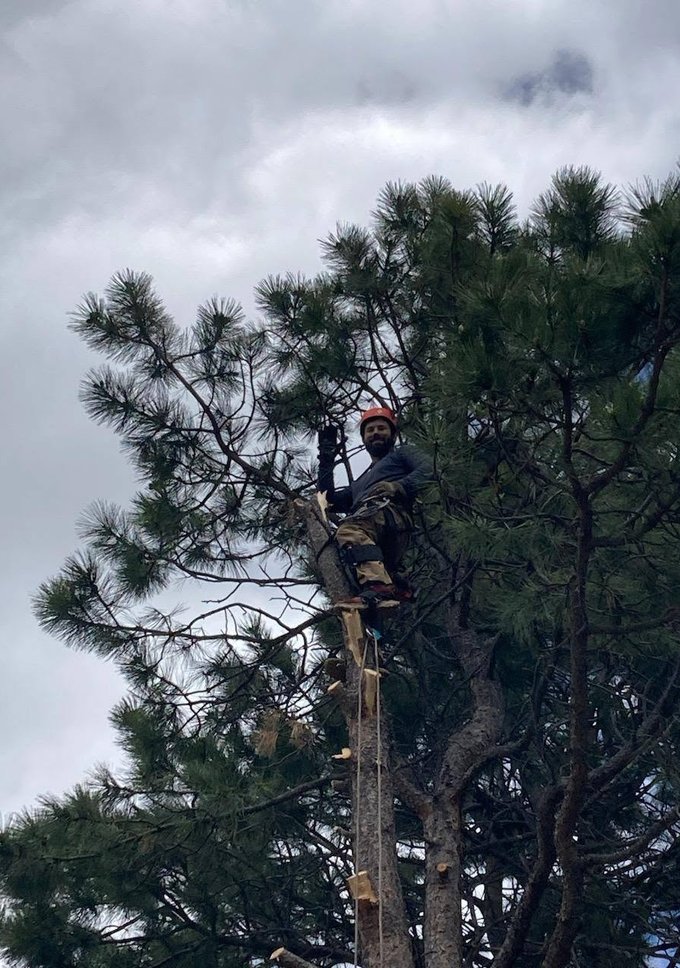
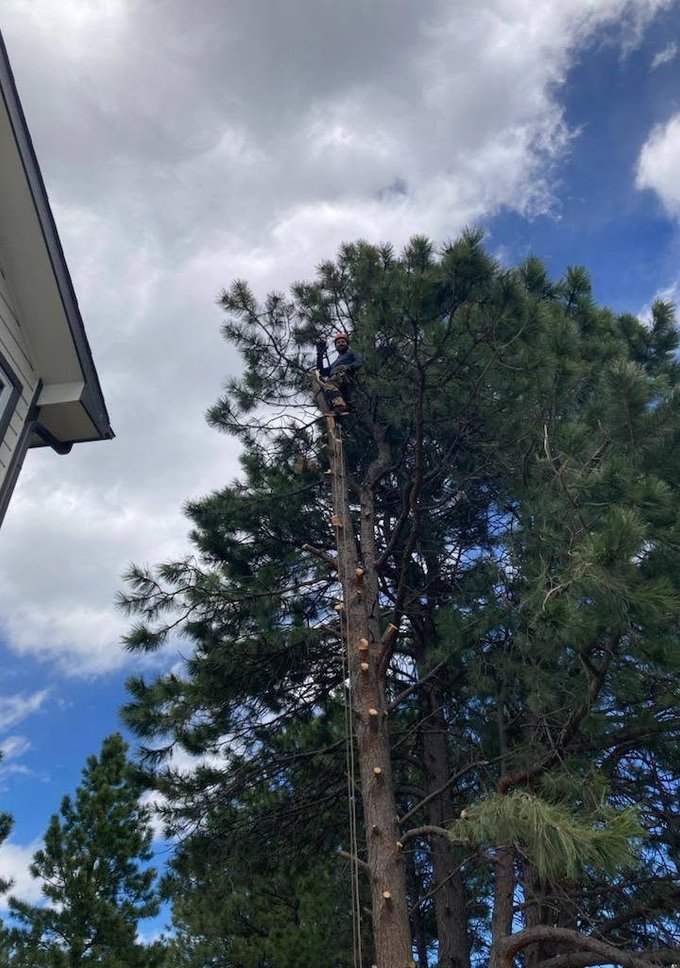
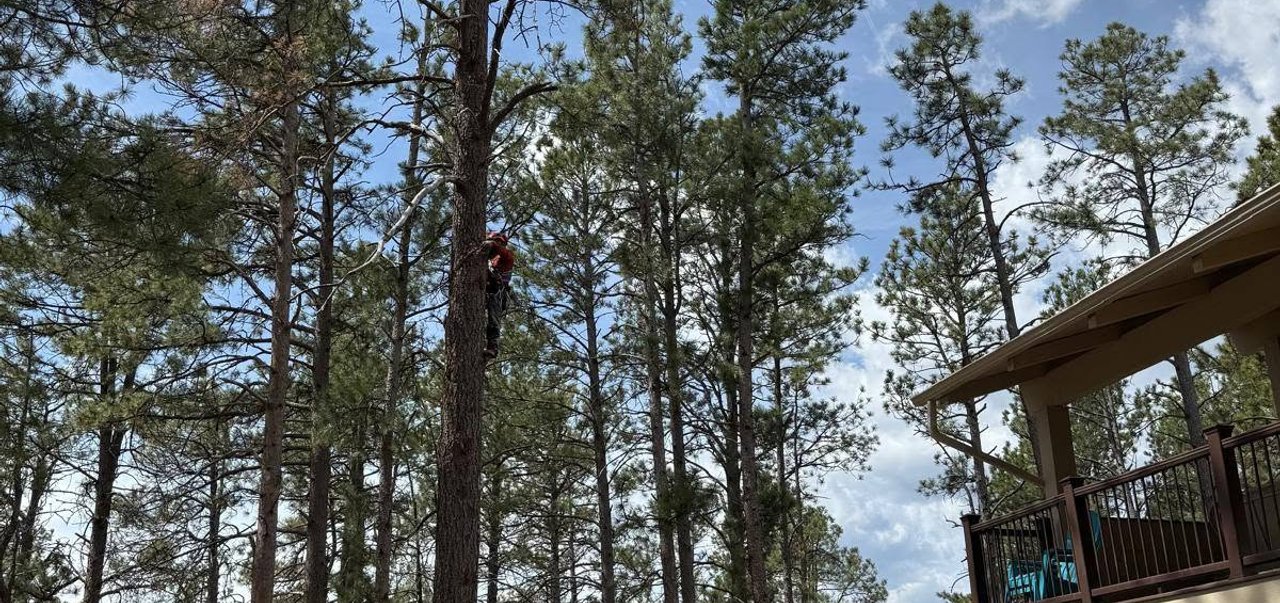
A 30-foot spruce two feet off a deck doesn't get felled. One of us climbs it and takes it down in short pieces, and the other lowers each one to the ground on a rope. Brian B. had exactly that tree. It took two and a half hours, and he said it looked like we were never there.
Trees a Bucket Truck Can't Reach
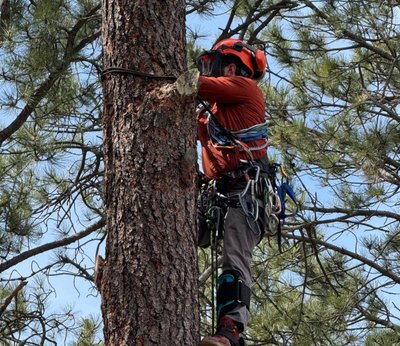
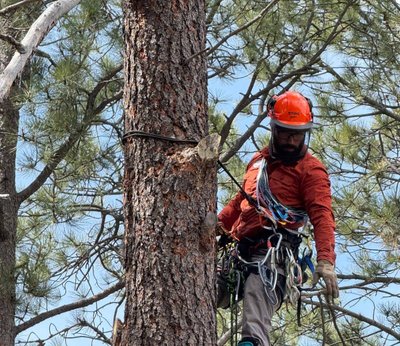
Backyards behind fences, steep lots, a pine wedged between two houses. If a truck can't get to it, we climb it. Josh was an instructor at the Special Operations Mountain Warfare Training Center at Fort Carson, which is where the rope work comes from.
Dead Ponderosa, Beetle Kill and Hazard Trees
A dead pine gets brittle fast. That makes it harder to climb and more likely to come down by itself in a wet spring snow. If yours went red this summer, call sooner rather than later, and we'll look at the trees next to it while we're there.
Removal and Haul Away
Cleanup is part of the job, not an add-on. Branches get chipped or ground, the wood goes in the trailer or gets split for your stove, and we rake and blow the yard before we leave.
Tree Trimming and Thinning
Limbs Over the Roof
Branches rubbing the shingles, filling the gutters with needles or hanging over the driveway where the snow piles up. We cut them back to a healthy spot on the trunk, so the tree doesn't answer with a mess of new shoots.
Deadwood Removal and Crown Raising
Dead limbs are what come down in wind and heavy snow. We clear them out and lift the lower branches so you can walk, mow and park under the tree. Raising the crown also keeps a grass fire from climbing into it, and around here that matters.
Emergency and Storm Damage
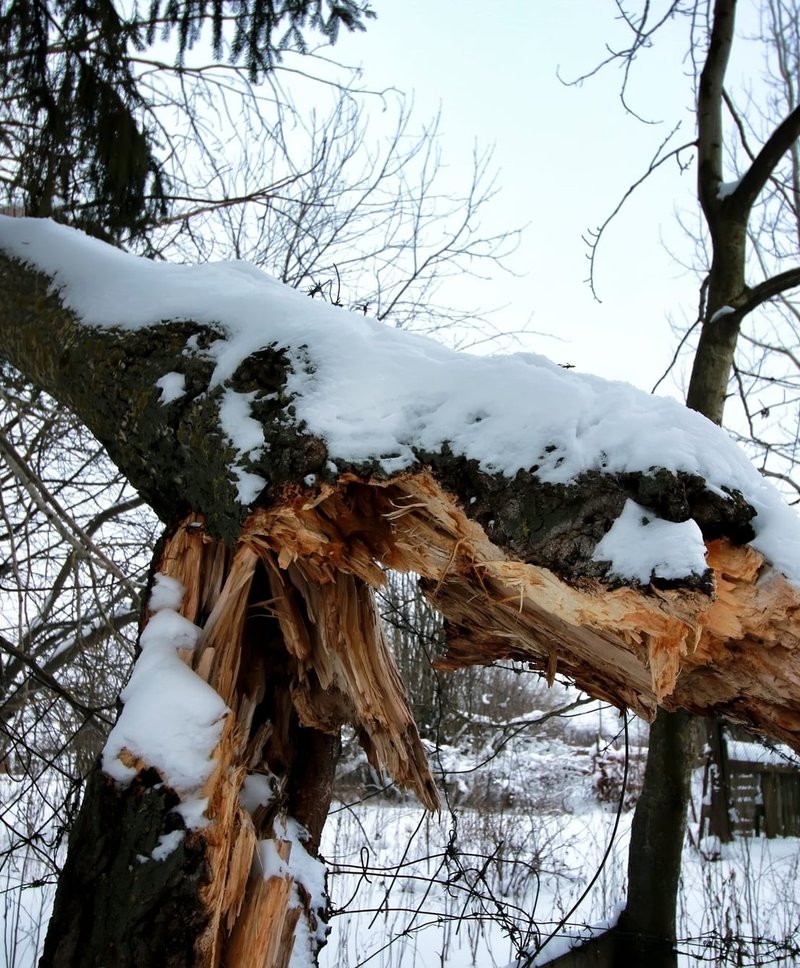
Spring snow is the big one around Monument. Heavy, wet snow on a ponderosa that's still holding its needles snaps limbs and splits trunks, and they come down on roofs, fences and cars.
Call or text a photo of what came down. Tell us if it's on the house or blocking the driveway, and we'll move you up the list. We'll cut it off whatever it landed on, haul it away and look over the rest of the tree so you know if more is coming.
Fire Mitigation and Defensible Space
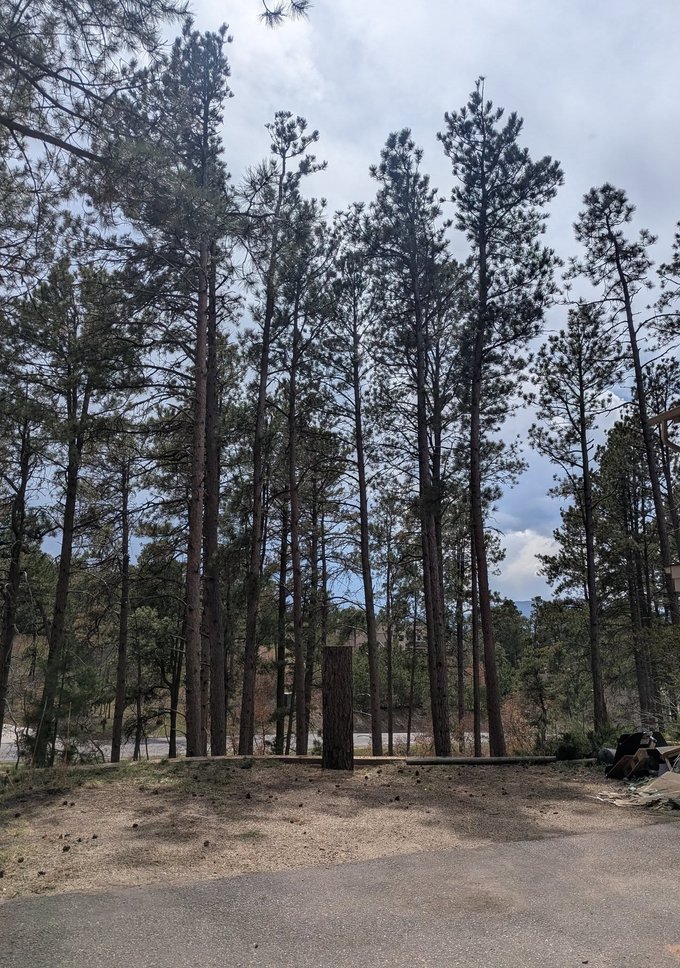
Defensible space is the buffer between your house and the trees around it. The Colorado State Forest Service splits it into three zones, and each one gets different work. We walk the property with you, agree on what comes out and what stays, then do the cutting, limbing and cleanup in one go.
Thinning, Not Clear-Cutting
Nobody out here wants a bare lot. We take out the crowded, sick and small trees so the healthy ponderosas left standing have room, and your place still looks like the forest you moved here for.
Help Meeting Insurance and HOA Requirements
Got a letter from your insurance company or HOA asking for mitigation? Bring it. We can often help you work through what it lists, zone by zone, and you'll know what was done where.
Zone by Zone Around Your Home
- 0–5 ft
Zone 1: 0 to 5 Feet
The ring right against the house, where nothing should burn. We clear limbs off the roof and away from the siding, pull out dead brush and take down any tree hanging over the eaves.
- 5–30 ft
Zone 2: 5 to 30 Feet
Thin the trees so the crowns sit about 10 feet apart, limb them up off the ground and clear the small stuff underneath that would carry a fire up into them.
- 30–100 ft
Zone 3: 30 to 100 Feet
A lighter touch. Take out the dead and crowded trees, keep the healthy ones and leave a forest that can take a ground fire without losing everything.
Forestry Mulching With a Skid Steer
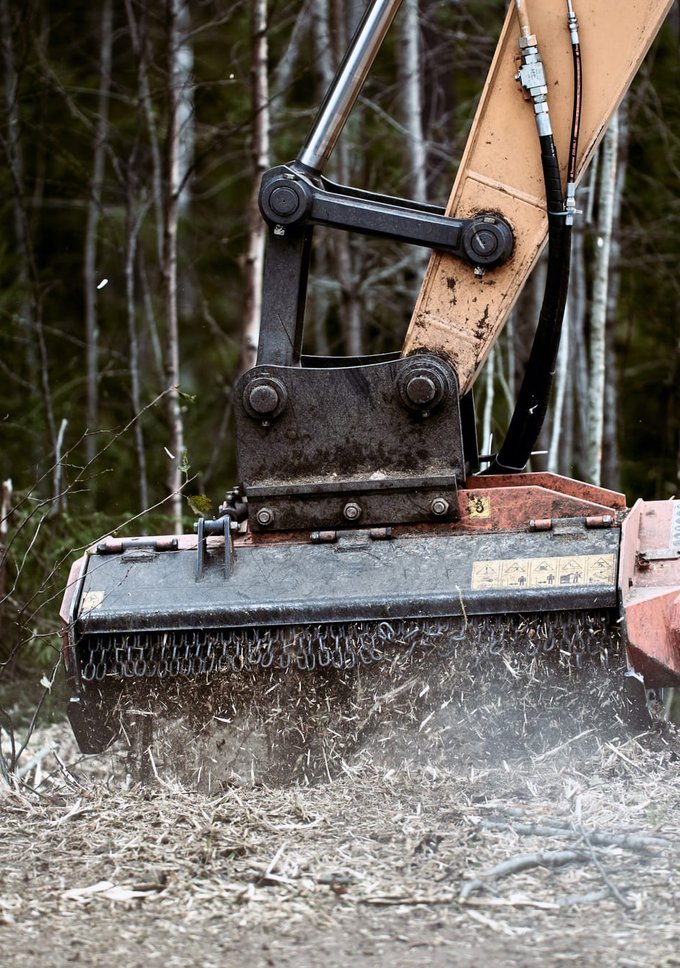
Forestry mulching (also called mastication) puts a grinding head on the front of a skid steer that chews brush and small trees into chips right where they stand. No burn piles, no slash to haul, and the mulch left behind holds the soil and slows the weeds.
Scrub Oak and Gambel Oak Mulching
Gambel oak, the scrub oak that takes over hillsides around Monument and Palmer Lake, is the classic job. It grows in thickets that carry fire like kindling, and the mulcher takes it down to the ground far faster than clearing it by hand.
Brush and Small Trees, Ground Into Mulch on Site
Overgrown fence lines, old trails, the back acre you haven't walked in years, small pines crowding the big ones. Tell us what's out there and we'll tell you if it's a job for the mulcher or the saws.
Lot Clearing for New Builds and Additions
Land Clearing for a New Home in Black Forest
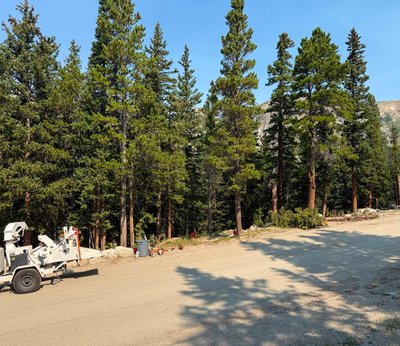
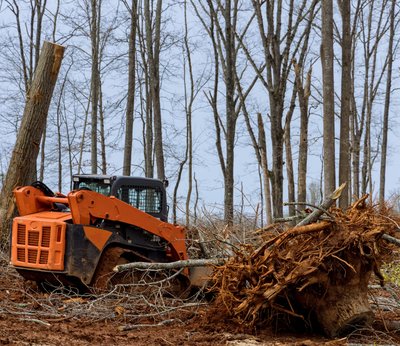
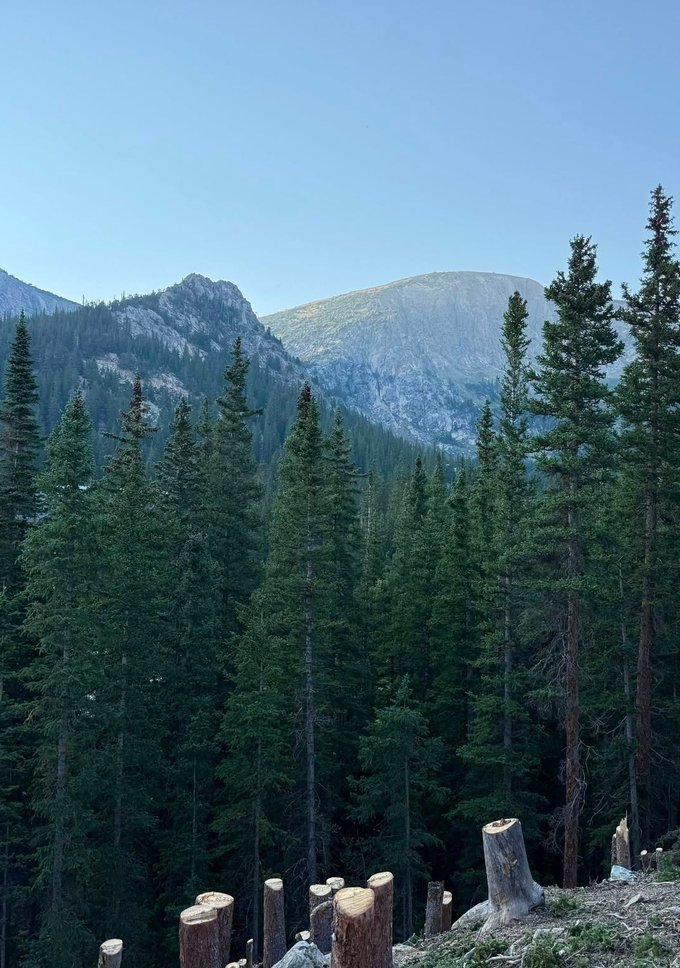
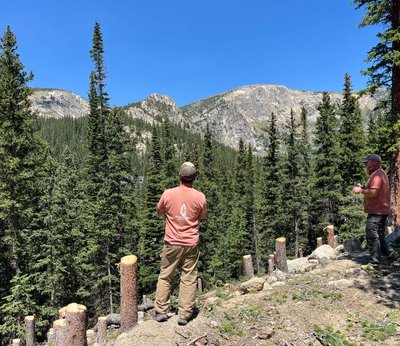
Building out east? We clear the footprint, the driveway path and the fire buffer your builder asks for, and leave standing the trees you want to keep. The biggest one so far was 130 trees off a steep mountain lot up near St. Mary's Glacier so a house could go in.
Room for an Addition, Garage or Driveway
Smaller jobs count too. If one or two trees are in the way of a garage, a deck or a wider driveway, we'll take them down and clean up so your contractor can get started.
Firewood by the Cord, Delivered
Plenty of the pine we take down ends up as firewood in somebody's stove. We sell split pine and aspen, seasoned or green, and bring it to you: $125 for a third of a cord, $220 for two thirds and $300 for a full cord.
Seasoned Firewood Delivery Around Tri-Lakes
There's no delivery fee within 15 miles of Monument. Tell us how much you need and where it's going, and we'll set a day.
Delivered in a Metal Tote, No Stacking
Each load comes in a metal tote that holds a third of a cord. Our mini skid steer sets it where you want it: in the garage, behind the house, wherever works. Keep the tote for a $25 deposit and we'll swap it for a full one when you're ready.
Your Tree, Split on Site
Having a big pine taken down? Keep it. We'll split it right there instead of hauling it off. Got logs you've been holding onto? We can split those too.
While we're there, ask us about that tree.
Call about firewood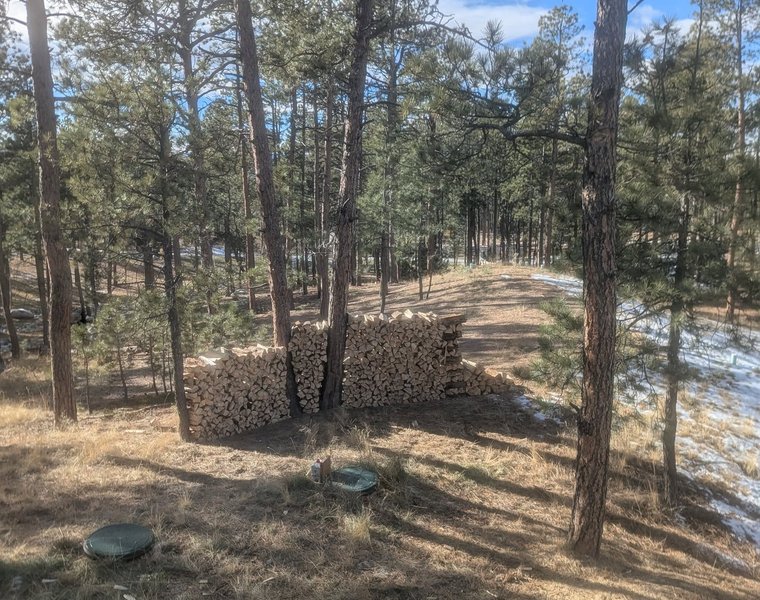
Also Available: Splitter Rental, Mowing and Dirt Work
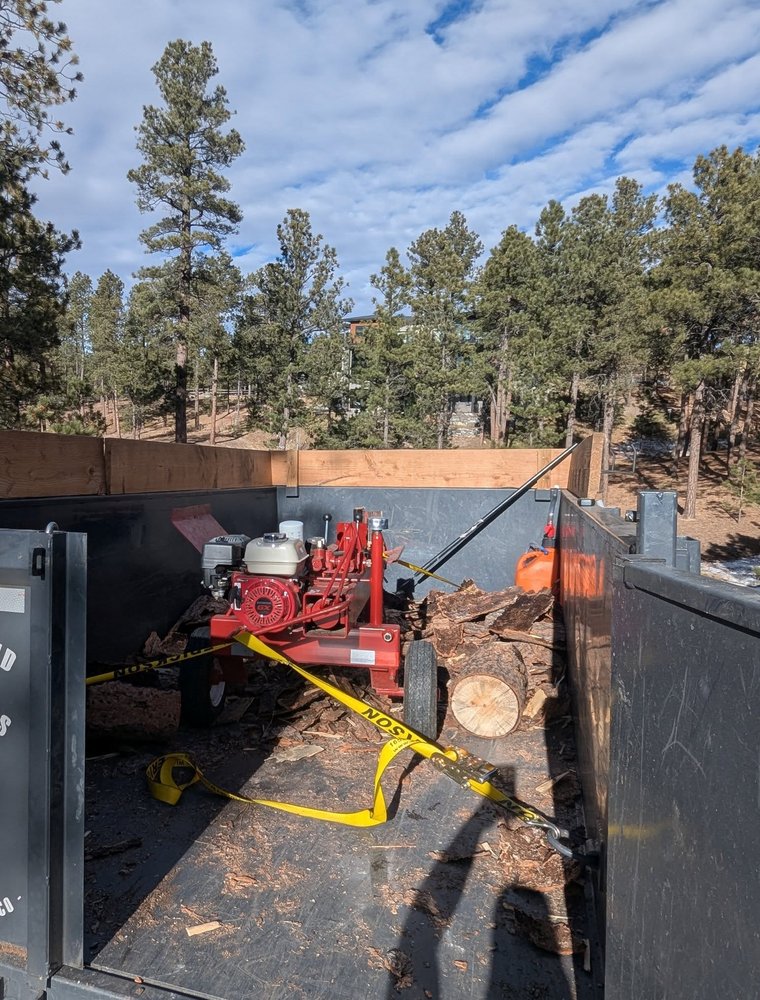
Got your own wood to split? You can rent our log splitter. We also mow bigger lots and take on small dirt work with the skid steer. Call and ask. If it isn't something we do, we'll tell you who does.
Common Questions
How much does tree removal cost around Monument?
It depends on how tall the tree is, which way it leans and what's under it. A 30-foot pine in an open yard is a short morning. The same tree between a deck and a power line takes rigging and more time. Text us a photo from where you're standing and you'll get a straight number before anyone starts a saw.
Can you remove a tree a bucket truck can't reach?
Yes, that's most of our work. We climb the tree, tie in and take it down in pieces on ropes. Josh and Kirk picked that up in Special Operations mountain training at Fort Carson, and there's more on that in the rope work story.
Do you haul everything away?
Yes, unless you'd like to keep some of it. Branches get chipped or ground into mulch, the trunk goes in the trailer, and we rake and blow before we leave. If you want the wood for your stove, we'll split it for you.
Will you tear up my lawn or driveway?
No. Because we climb and lower instead of driving a bucket truck across the yard, the heavy stuff stays off your grass. Pieces come down on a rope to a spot we pick ahead of time, and we clean up the sawdust too.
How do I know if my pine tree is dead?
Watch the needles. Green going yellow, then red, over a few weeks is the big tell, and it usually starts at the top. Little blobs of sap on the trunk and bark falling off in patches mean beetles. Send a photo and we'll tell you what we see.
Should I trim the tree or take it out?
If it's healthy, trimming usually does the job and you keep the shade. If it's dead, leaning hard at the house or rotten at the base, it's safer to take it down now than after a storm does it for you. We'll tell you which one we'd pick if it were our yard.
What does forestry mulching cost per acre?
There's no honest flat rate. A thin stand of scrub oak on flat ground goes fast, and a dense thicket on a slope doesn't. We walk the ground with you and price the job, not the acre.
What's the difference between thinning and clear-cutting?
Clear-cutting takes everything. Thinning takes the crowded, dead and small trees and leaves the healthy ones with room to grow, which is what slows a fire down. We thin unless you're building and need the ground bare.
When's the best time of year for mitigation work?
Fall through spring is easiest. The ground's firm, fire danger is lower, and the work's done before summer. That said, we'd rather do it in July than not at all.
Can you help with an insurance or HOA mitigation letter?
We can often help. Send us the letter or the list, and we'll tell you which parts we can take on and quote those. We do the cutting and cleanup; any inspection or sign-off still comes from whoever sent the letter.
How is firewood measured and priced?
By the cord. A full cord is a stack 4 feet high, 4 feet deep and 8 feet long, 128 cubic feet. We deliver in metal totes that each hold a third of a cord: $125 for one, $220 for two and $300 for a full cord. Delivery is free within 15 miles of Monument.
Do you work outside Monument?
Most of our jobs are in Monument, Woodmoor, Palmer Lake, Gleneagle and Black Forest. We've also worked up in Woodland Park, Divide and Fairplay, and cleared a lot near St. Mary's Glacier. If you're farther out, ask. We'll be honest about whether the drive makes sense.
Are you licensed and insured?
Yes, both. Pineland Tree Services is licensed and insured.
Call or Text a Photo for a Quote
Take a picture of the tree from where you're standing and send it over. Josh or Kirk will get back to you with what it'll take.
- Call (419) 551-8477
- Text (419) 551-8477
- Based in Woodmoor, Monument, CO